


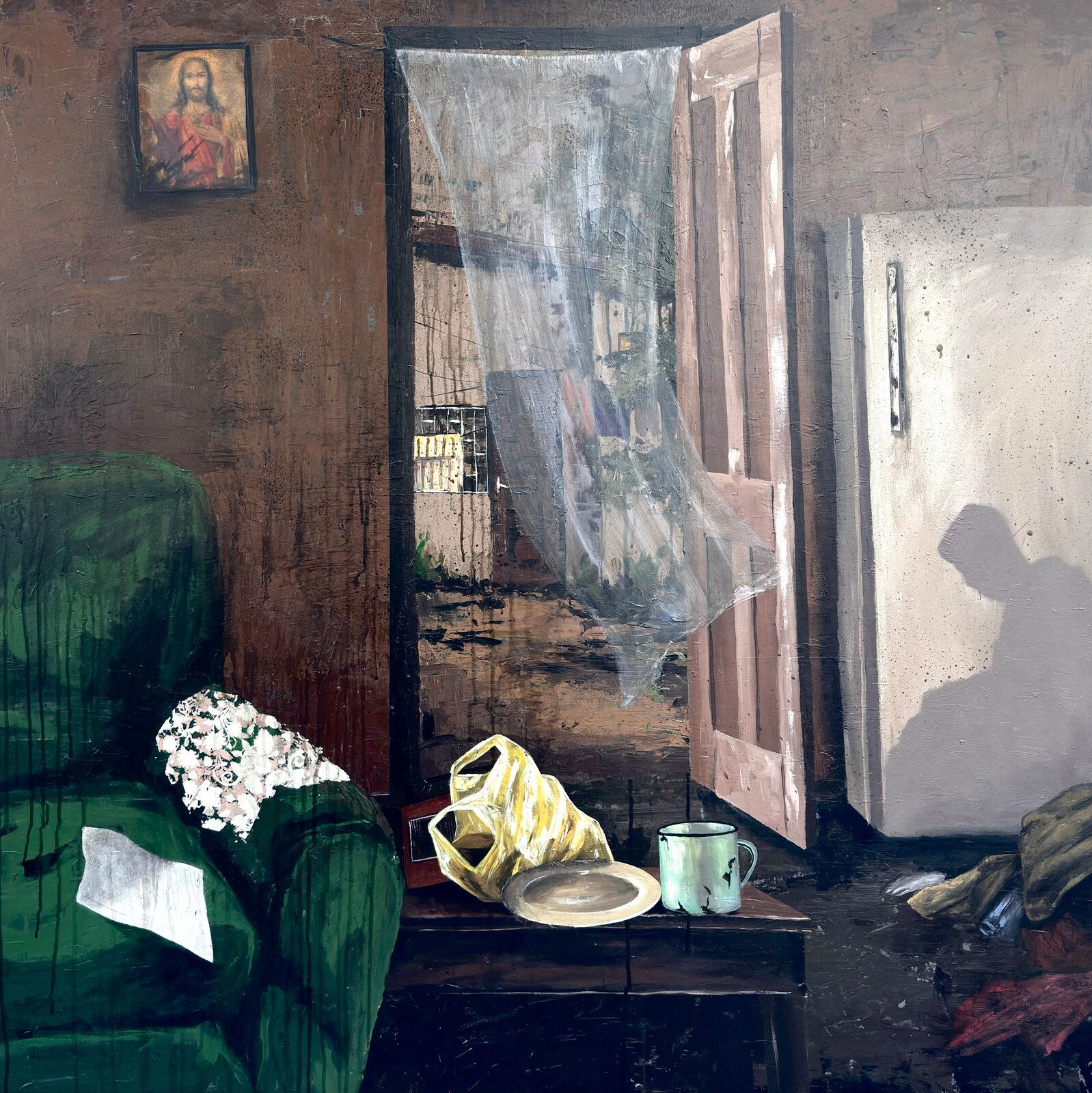
In early 2026, Tobiloba Fasalejo exhibited a new body of work titled, “Neither Absence, Nor End”, at Rele Gallery. The artworks were the fruits of the time spent at the bootcamp and residency program organised by the gallery’s art foundation. He was a part of the 3 resident artists chosen for the 2026 edition of Rele Young Contemporaries. His works stood out in their warm dark brown hues and dimly-lit interiors. Painted like vignettes, the artworks draw you in like something familiar. Like a piece of memory long-forgotten in the crevices of your mind. His works were based on memory, paternal absence, and healing.
Tobiloba Fasalejo was born in a religious family. His father works as a pastor in The Celestial Church of Christ at a branch far from home. He was transferred to this distant location five years before Fasalejo was born. So, he’s hardly ever at home and only comes home once or twice a year. The artist said he grew up without a father figure, that’s why the theme of absence is so dominant in his work.
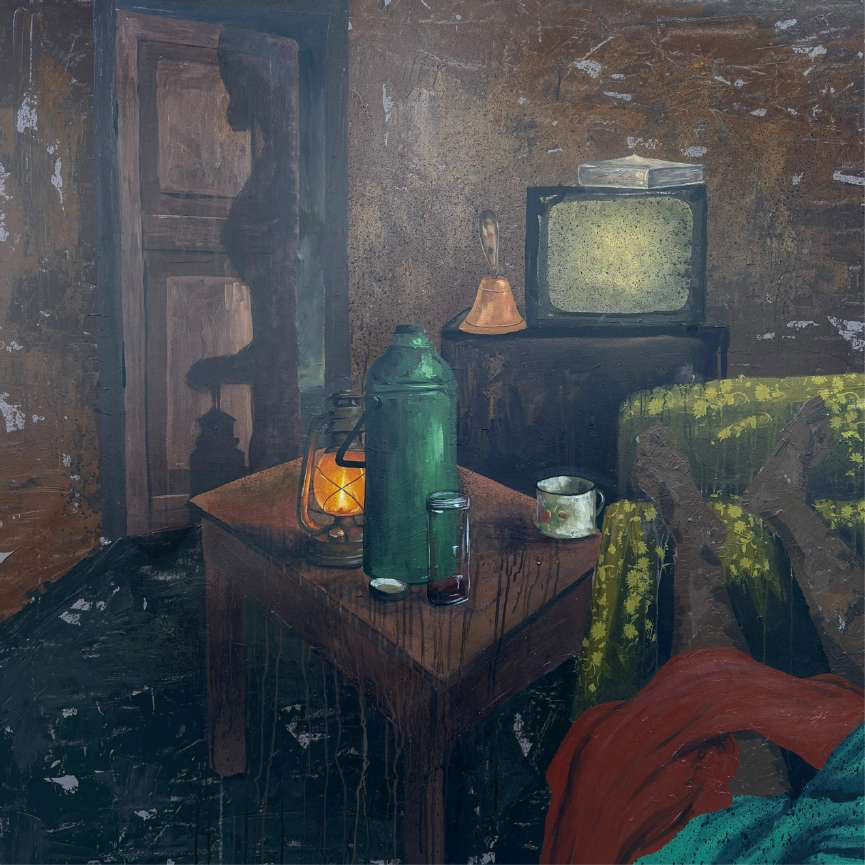
“Neither Absence, Nor End”, is built around the absence of his father during his childhood and the memories he has of it. Each painting shows a sliver of his childhood memories. In our interview, Fasalejo said he could only relate with his father through the religious morning devotion routines he established and the stories people recount about him. To him, he could feel his father’s presence through the things he stood for. Fasalejo said, “Whenever I ask my father a question, he tells me to read my Bible.” So, he represented his father in his paintings with religious symbols like a bell or a bible as a form of visual metonymy. This can be seen in his artwork titled, Morning Devotion. The lacy fabric placed on furniture in the interiors he painted symbolised his mother because she’s a tailor.
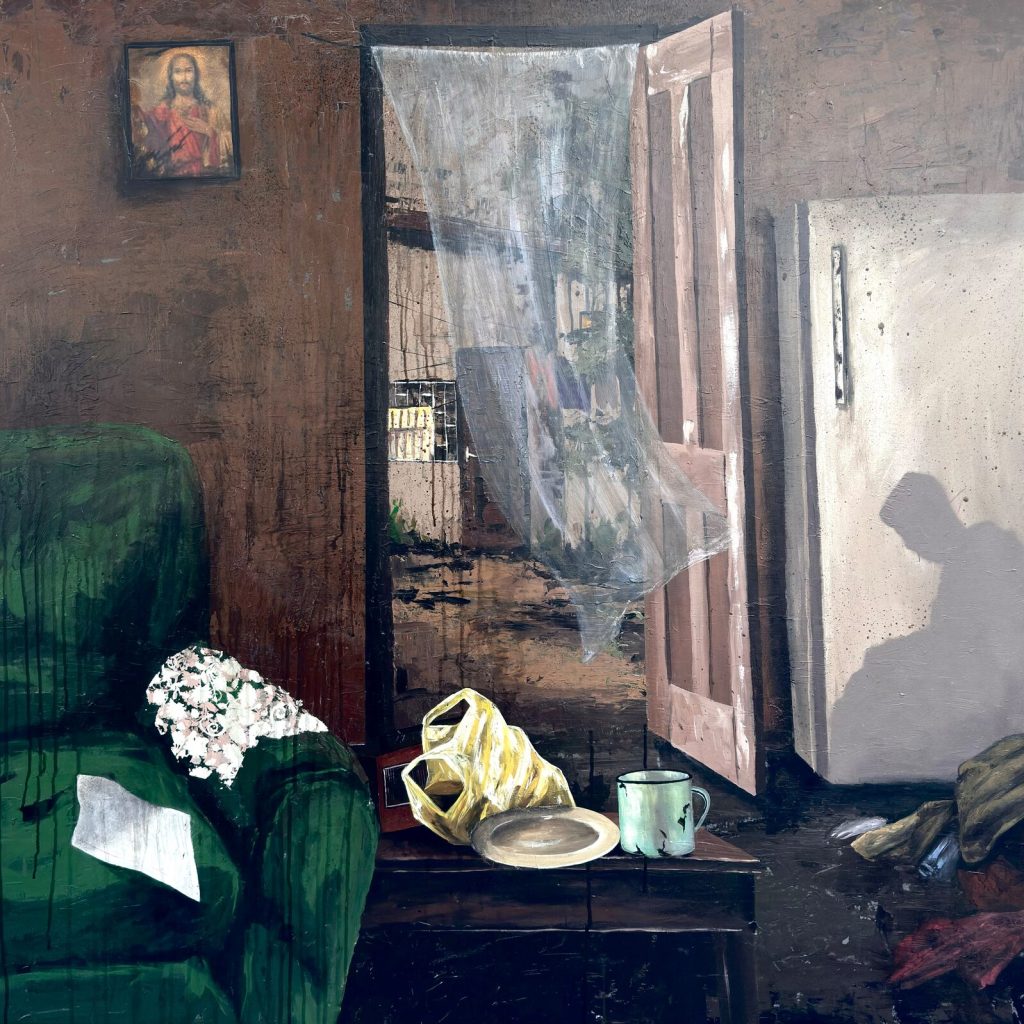
Fasalejo has been writing since he was little. Back then, he used to write short stories and comics to navigate his confusion about his father’s absence in his life. He wrote letters to his dad and put them in places he hoped he would see them. His favorite chair. The TV. He painted one of such letters in one of his paintings titled, Please come home. When I asked him if his father ever read those letters. He said, “I don’t know. He never acknowledged them.”
When talking about his childhood without a present father figure, Fasalejo said he had to grow up faster and living at home was a bit restrictive. “For a while, home felt like a cage I had to stay in. But it later became comfortable and I wanted to be indoors all the time”, he said. Also, he had to endure forgotten birthdays. In his work titled Feels like a normal day, he painted a bottle of Coke his mother surprised him with on his 10th birthday. The red balloons also shown in this work represented his desire for fantasy, for the special things he desired on his birthday but hardly got as a child. In his words, they were out of his reach. The house he grew up in was always devoid of sunlight. The windows were always closed and the curtains drawn. And this was the atmosphere that he painted in his works. In his paintings, the walls are painted dark brown, bathed in a warm nostalgic light. When asked why he often painted dark environments, he explained that bright colours did not reflect his lived experience, so he did not feel comfortable using them.
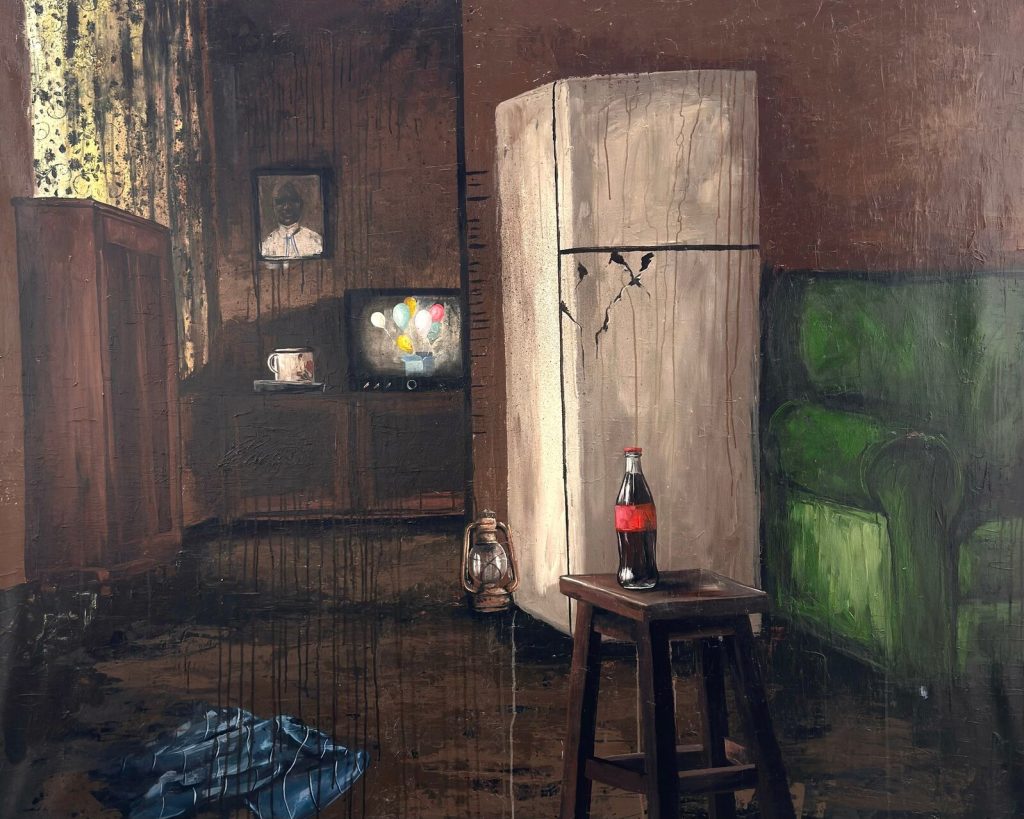
Painting this body of work was therapeutic to him, an opportunity to let out pent up feelings of anger and resentment, as evidenced by his use of a palette knife. He said he wanted to express the rawness of his emotions and the palette knife was the best tool to do that. I asked him about the paint drips on his work. He said they were not intentional, but he believes that they represented old memories attached to the scenes he painted.
In one of his IG posts about his work, he used the then-trending AI version of the song, Papaoutai. I asked him if he knew the meaning. He said he knew that the song was about a boy longing for his father. Then I told him that the song is similar to his work and explained the story behind it. The singer, Stromaë, also had a father who wasn’t present during his childhood. His father died in the Rwandan genocide in 1994. Stromae wrote the song as a way of processing the pain of not having his father present in his life and to ponder on the question, “What makes a man a good father?”

