

Ray Darlington paints subjective worlds with lustrous pastel crayons. His sweet spot is making graphite sketches and brushing them over with acrylic paint, so they capture both hardiness and vulnerability, like nature. Afrorealism, he calls it, for his preoccupation with sentiments that mark the contemporary African experience. Hyperrealism is how his clients describe his style in light of the Instagram tradition popularized by algorithmic shockvertising.
The skin markings on his subjects appear chiseled, recalling the vigilant intensity of Kelvin Okafor’s charcoals. This vigilant intensity is most visible in his eyes. Darlington spends an almost unreasonable amount of time on them, so they appear to follow the viewer across the room.
The ethnographical markers, such as tribal marks and cultural attire, which feature liberally across his work, are not bound by historical accuracy. Instead, they seem to function as fillers or caches of inspiration. This “laxity” in accurate representation of cultural markers has become increasingly common. Essayist Chimezie Chika remarks that the practice emerges from the “appendages of a social media culture that has become more intensely visual and that places great premium on self-defined orchestrations of curated images.” However, such charges of superficiality tend to come from critics rather than patrons. Collectors appreciate the internal components of his artwork— clarity of emotion and storytelling— prioritizing this over accurate representation of ethnic markers. What might be unforgivable in literature, where research is foundational, seems to carry less weight in painting, where feeling often defines meaning.
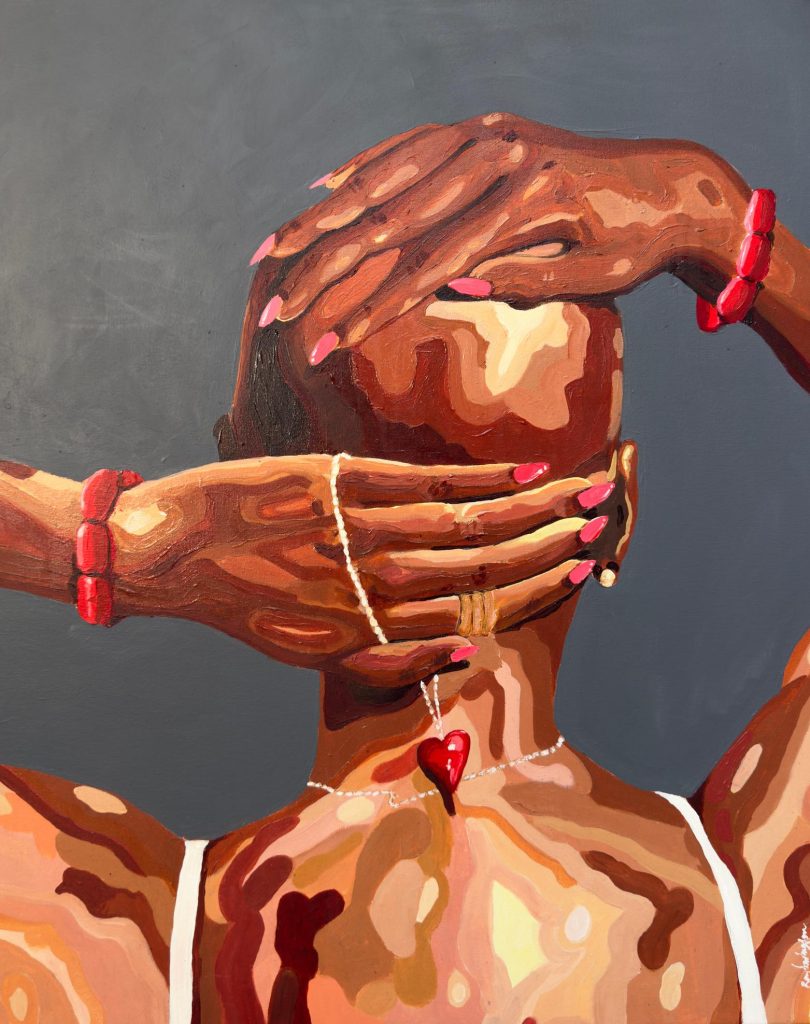
The Weight of Tenderness
The persona in Obafemi Thanni’s poem, “Nostalgia” and Darlington have tenderness as a common inspiration. Although the poet understates where the painter dramatizes, and vice versa, both arrive at opposing ends of the gap between ‘wanting and having (mother’s) outstretched hand.’ In “Nostalgia”, Obafemi’s persona muses to an absent pigeon, embracing the sticky residue from past contentment. In the poem, the impact of fallouts between children and parents is taken for granted and what remains is longing for tenderness in an alternate reality.
& the truth is not the same as ease.
I long for my mother before she is my mother
I imagine she was more tender then.
Darlington, on the other hand, places the subject of The Weight of Tenderness fully inside this warmth. And it tells a completely different story. The title of the painting is oxymoronic by design, and at first glance the theme is not so easy to pin. The shoulders of the subject are truncated from their arms, cropped aggressively. Unconnected. The painter denies stable orientation. Any point of the subject’s body might as well be the viewer’s focal emphasis. The subject’s back is turned forward, [probably], and hands (it is unclear who owns them) frame her head, where their eyes and mouth should be. She is bejewelled, a love pendant dangling from her hands. The warm tones of her skin makes it fleshlike. Darlington’s use of the impasto technique causes the work to appear segmented and dissonant. The subject’s body reads like a map. Some of the paint drips, liquid that would not stop moving. This introduces a level of violence to what may have been a soft composition.
The hands are the main characters. In Amoako Boafo’s universe, hands play active roles in the story. So it seems with Ray Darlington. What you might perceive as the core theme of his works ties to how you perceive the world. Do you see his subject sassy in blue, turned away from your curiosity? Then the hands in the foreground must be the subject’s. They hold rejection steady, and seem to reject the viewer’s scrutiny, the minimum courtesy anticipated when one interacts with art.
Do you see the hands poke into the image, imposed upon the subject by another?; They (the subject) are not alone though they strongly desire to be. Worse, the intruder is faceless even as the subject remains restrained, gagged and faceless. The dangling pendant rests within the image, failing to identify the intruder’s gender. It is unsettling; what should be intimacy becomes control.
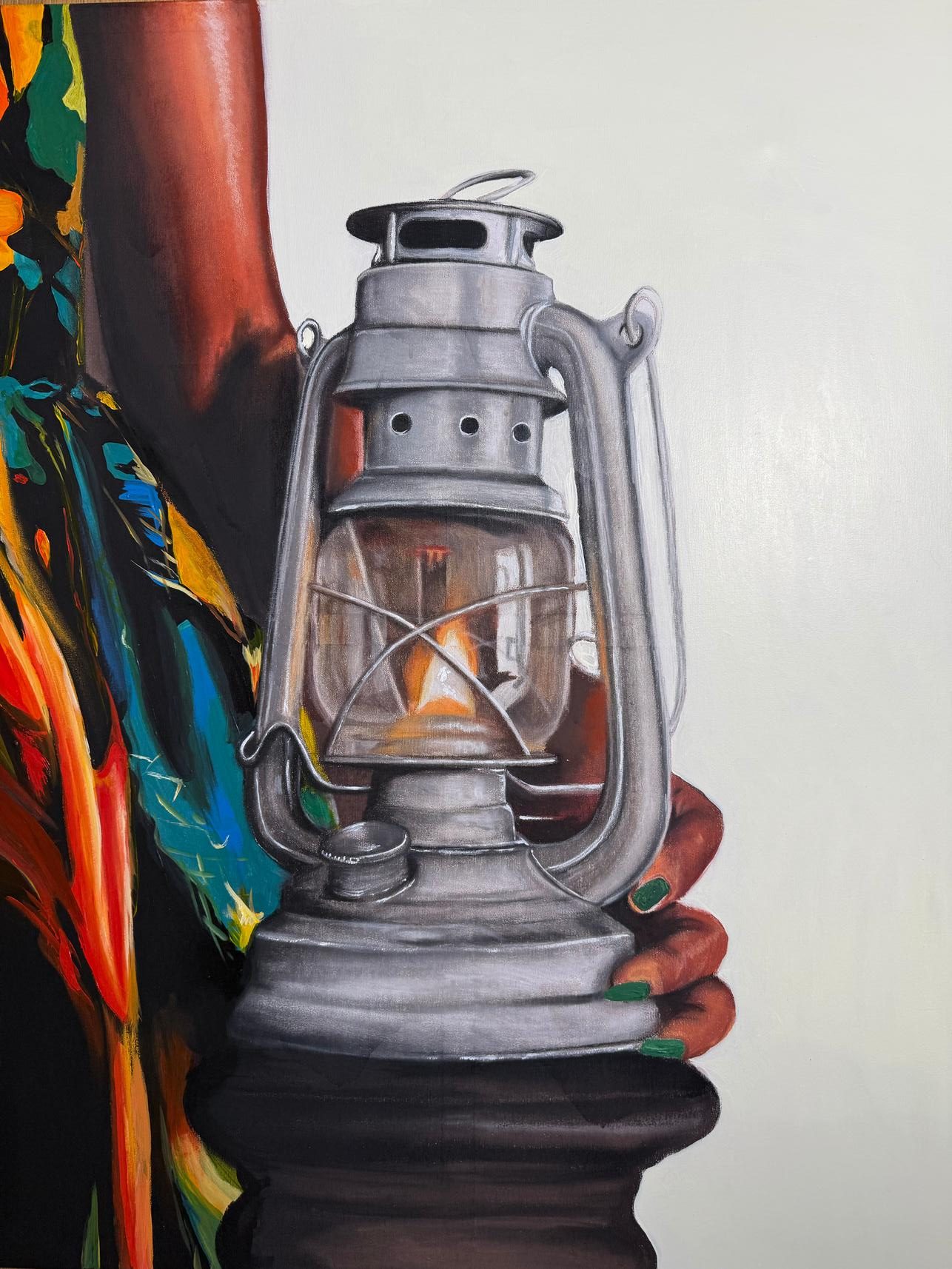
The Keeper of the Glow
The hand—whole and reconnected to the body—resurfaces in Ray Darlington’s The Keeper of the Glow. A kerosene lantern, familiar to us, is attached to it. If The Weight of Tenderness asks who controls the scene, The Keeper of the Glow suggests an answer – the one who holds the light.
Darlington’s vision that grew in the light has led its painter across Western Europe where his art practice thrives. From exhibition to exhibition, the detailing of his work betters. In newer works, the acrylic brush noticeably dominates coarser mediums.
The Keeper of the Glow and TheWeight of Tenderness were displayed side by side in Espacio (London, 2025) in March, the diptych stressing the idea that light (in the lantern) is viewer’s; only they know what it is that they want from life. Darlington’s allegories are easy to decipher once you slow down for them: a too-submissive child is faceless, a tenderhearted girl broken by the world hawks eggs, the boy with eyes the size of ponds hangs on a pipe- borne lifestream with jaw and both hands. If one looks again, this time beyond them pastel, to the artist, they see him, artist, easel: evolving his effect on contours of the moment.
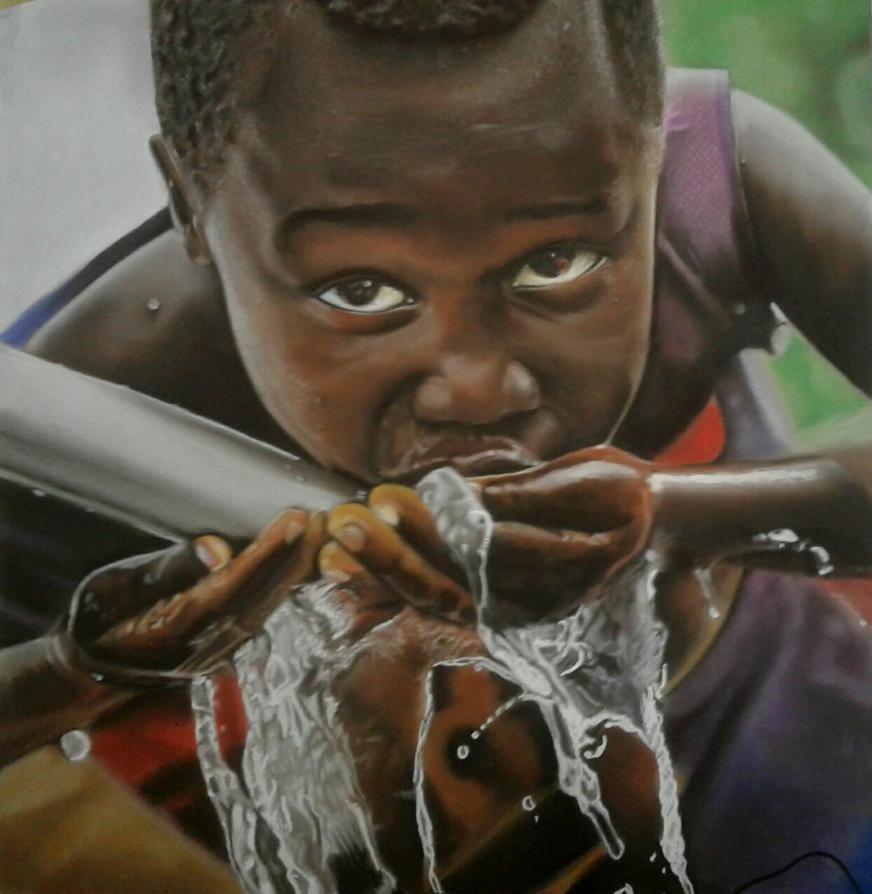
The Lifestream

